(Disclaimer: This Post Contains Affiliate Links. Any Purchase Made Earns me Commission)
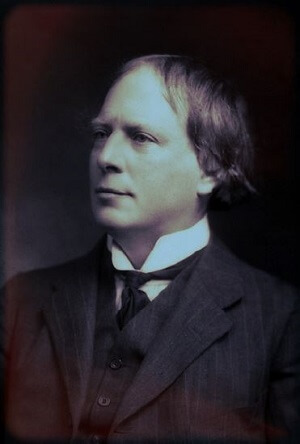
The Three Imposters
Arthur Machen mostly delved into shorter fiction, whether it was true short stories, novelettes (The Inmost Light) or novellas (“The White People” or “The Great God Pan”). Like Lovecraft, his novel writing was sparse (in Lovecraft’s case his only true novel was released posthumously), but he did write a piece that had a massive lasting effect on Horror as a genre: “The Three Imposters”.
When I first delved into this book, I found it to be both interesting and odd by nature. You see, the book starts with a group of characters doing something quite clandestine. You get the impression that these are your imposters. And, indeed, they are. But what makes them imposters? Are they characters in disguise? It really is in their approach to the main character that you get the answer to that, and even that only truly at the big reveal the end.
The Three Imposters follows the main character, Dyson, and his friend Phillips. These are reoccuring characters throughout more than a few of Machen’s works. Indeed, Dyson is man who is deeply interested in the Occult and the weird. He is almost a Sherlock Holmes type, and Phillips more than acts as his Watson like foil. He attempts to ground Dyson, as if the pursuit of the strange is beyond reason. Phillips sort of behaves like the reader’s mouth in a way, and he is very effective in these regards. The Three Imposters tends to be a little different in his approach, because it is kind of a series of happenings. You see, Machen has Dyson meet a character early on in the story, who he befriends, and along his way he keeps getting approached by random people who beseech him for help.
What I love so much about this novel is the in which the “Imposters” try to entice Dyson. You see, they come to him begging him to help them find a bespectacled man, but then start to engage him with tales of the weird and the strange. This really stands out, because as you learn later these “Imposters” are absolute con-artists. They obviously know more about Dyson than you would know at first, and I absolutely adore that. Think about it this way, if you were trying to disarm and engage with someone for information, would you not try to appeal to their urges? Their love of the Occult and the weird perhaps? Truthfully all of the “Novels” as they are called, within the novel itself, are fantastic, but there are two that are so fantastic that they have had an everlasting impact on the genre. Infact, they have been published as stand alone pieces from time to time, and indeed that is how H.P. Lovecraft first read the first I will discuss.
The Novel of the Black Seal
Probably the most important of the pieces, The Novel of the Black Seal follows a purported man of science, who employs a nanny to watch his children while he explores how to use a black stone as a guide to find ancient fairyfolk. If this sounds familiar to you–if you are a lover of Lovecraft–it should somewhat be understood it is a major nod from H.P. Lovecraft in “The Whisperer in Darkness” that there is an ancient alien race in the mountains, and the narrator’s contact, a man of science, has a black stone, etc.
That is not at all where the use of this novel’s horror ends either. Just like the Deep Ones, we find out that these fairyfolk mated with someone from the quaint village. As you can probably tell by now, H.P. Lovecraft was incredibly influenced by Machen. Any one seeking to understand Lovecraft’s roots should absolutely pick up a collection of Machen’s works, and get sucked in the Folk Horror master.
The Novel of the White Powder
This is my personal favorite piece. There is a major slow burn prevalent in this piece, and an overarching wrongness. A sister comes home to her dear brother, Francis Leicester: a scholar going to law school. Indeed, a man of reason! However, in his need, he is prescribed a White Powder to aid in his fatigue by a most well respected family friend and doctor. However, Leicester insists on using a personal pharmacist he trusts.
The narrator foreshadows that maybe this was not the best idea. Some of the most dense and dripping prose, this piece left a lasting imprint upon my being. The way Machen slowly decays poor Leicester, one can only see the nod from “The Case of Charles Dexter Ward” at times. He locks himself away, refusing to be seen, for instance. The finale of this piece is some of the most gruesome telling of body horror, and I dare not spoil it for the readers who have not had the opportunity to be sucked in, but my heart raced and my face contorted at the madness. A work of sheer genius. I find that this horror left a lasting imprint on Lovecraft as well! The way in which he describes some of the horrors we see is just pure art at its finest!
Folk and Body Horror
While Machen leaned into the rich Welsh Folklore about fairies and fauns, he tied it to the weird, the occult, the darkness. “The Great God Pan” was a masterful start to this style, and it is seen again later in major tales such as “The Inmost Light” and “The White People” which I will discuss in the next two breakdowns.
Body Horror, is a genre in and of itself, and Lovecraft really leaned into it in some amazing pieces like “The Colour Out of Space” I would tell you the descriptions within that amazing piece may not exist without The Novel of the White Powder. If you are new Lovecraft’s influences there may not be a greater start than Arthur Machen, Master of Folk Horror.
Read Arthur Machen’s “The Three Imposters”
Previous POst
-
Tentacles and the Occult: Arthur Machen’s Impact on Lovecraft (Part 3)
(Disclaimer: This Post Contains Affiliate Links. Any Purchase Made Earns me Commission) The Inmost Light: The Object Focus H.P. Lovecraft was very fond of utilizing objects as focal points for the Occult. We see…
-
Tentacles and the Occult: Arthur Machen’s Impact on Lovecraft (Part 2)
(Disclaimer: This Post Contains Affiliate Links. Any Purchase Made Earns me Commission) The Three Imposters Arthur Machen mostly delved into shorter fiction, whether it was true short stories, novelettes (The Inmost Light) or novellas…
-
Tentacles and the Occult: Arthur Machen’s Impact on Lovecraft (Part 1)
By now it is no secret that H.P. Lovecraft was a voracious reader. There was a select group of writers that helped forge his craft and focus on the cosmic. Perhaps none had a…
-
The Sarnath-Innsmouth Connection: Are the Beings of Ib Just Primordial “Deep Ones”?
(Disclaimer: this post contains afflliate links) In my last entry, we discussed the lore of the Deep Ones of Innsmouth legend. Interestingly, there is another creature which cannot remain anonymous that is involved in…
-
The Deep Ones: A Creature Feature
The curse that has befallen the rotting, decaying town of Innsmouth is a twofold problem, one that marries the unholy union of greed and lust. First, the Deep Ones mated with their women from…
-
Why ‘The Dunwich Horror’ is the Perfect Starting Point for New Cthulhu Players
The Call of Cthulhu tabletop Roleplaying Game pitches Investigators against the horros of the Mythos and the cults that support them. It goes without saying that Dr. Armitage, Dr. Morgan, and Professor Rice are…
-
My First Descent: ‘The Festival,’ Christmas, and the True Face of the Cthulhu Mythos
His kinspeople seem friendly, but there is something eerie about the old man and the woman at the spinning wheel in the corner. The juxtoposition of seemingly unthreatening souls with the hint that the…
 Old Ones Keeper
Leave a comment